In our Christian journey today, we encounter many struggles—trials, doubts, losses, and pressures that can feel heavy and lonely. For our spiritual growth and stability, we need strong faith, which acts like an anchor during tough times and a light of hope in darkness. Gennesaret, a small area noted in the Gospels (Matthew 14:34; Mark 6:53), shows us a faith that doesn’t require proof or perfect conditions; it’s a place where God’s amazing power was shown among everyday people. This region is important because it experienced life-changing events that displayed Christ’s supernatural love for us. It encourages us to trust in Jesus right away and to act on that faith without delay, helping us believe in His promises that go beyond what we can understand. As we face our own difficulties, the example of Gennesaret reminds us to have unwavering faith, teaching us that God often comforts us when we take brave steps into the unknown, filled with hope and certainty. Let us remember that our God is always faithful, guiding us through life’s storms, strengthening our spirits, and giving us the power to share His greatness in every situation we face.
Historical and Geographical Significance
Gennesaret was found on the northwest shore of the Sea of Galilee, nestled between the towns of Capernaum and Magdala. This area is very important because it was the setting for many of Jesus’ miraculous healings and teachings. The Gospel of Luke 5:1 refers to the Sea of Galilee as the Lake of Gennesaret, a name that shows how rich and fruitful the land was, reflecting God’s care and creativity.
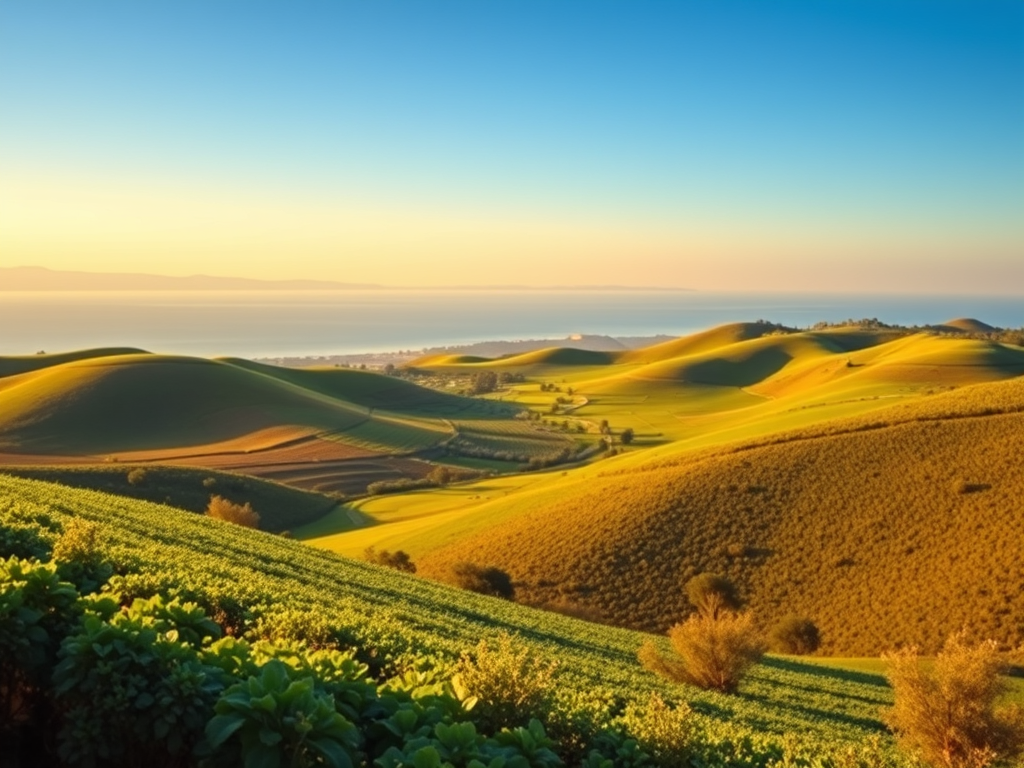
The Plain of Gennesaret stretched about four miles along the coast and was roughly one mile wide from the shoreline to the nearby hills. This beautiful area had plenty of water from streams, making it perfect for growing a variety of crops. The warm climate was a blessing from God, allowing farmers to enjoy a long growing season filled with abundant fruits and vegetables, all praising the Creator with their abundance. The ancient rabbis recognized this land’s fertility and set rules against taking its produce to Jerusalem during holy celebrations, so pilgrims wouldn’t be distracted by the delicious fruits. They lovingly called it the “Garden of God,” highlighting its gift to His people.
In this beautiful land, a wide range of crops thrived—grapes, walnuts, rice, wheat, figs, olives, colorful vegetables, and sweet melons grew abundantly. Wildflowers and native trees added to the landscape’s beauty, echoing the splendor of God’s creation. Even when the land was neglected for many years, recent efforts have helped restore parts of Gennesaret, showing a commitment to its agricultural legacy and spiritual history.
Gennesaret was also an important commercial center on the northwest shores of Galilee. The fishing industry prospered alongside farming. Magdala, once known as Tarichea, became the main city of the area, housing about 40,000 people and a fleet of 230 fishing boats. Capernaum, located at the northern tip, served as a Roman military outpost and toll station on the major trade route between Damascus and Caesarea. This busy population provided a perfect setting for Jesus’ ministry, where He connected with people and shared His parables and teachings in their daily lives. The nearby Gentile territories allowed Jesus to spread His message of love and redemption to many different people, touching their hearts.
Elwell and Beitzel beautifully describe Gennesaret as “the garden spot of Palestine,” where different crops and trees grew in harmony, showing God’s abundance (Baker Encyclopedia of the Bible, Vol. 1, p. 856). Buehler adds that the area’s natural richness, large population, and important trade routes made it a special place for Jesus’ teachings and healings (ISBE, Revised, Vol. 2, p. 443).
As we think about the importance of Gennesaret, we see God’s caring hand and the many ways He chose to reveal Himself to His people. The landscape serves as a powerful reminder of how nature, economy, and spirituality intersect—showing us a God who wants to be known and worshiped through the beauty of His creation. In this fruitful land, the Kingdom of God grew, and lives were transformed forever, echoing the message of hope and salvation that remains strong to this day.
The Disciples in the Storm
Before Jesus and His disciples reached the sunny shores of Gennesaret, they faced a tough night on the Sea of Galilee. The Bible tells us, “The boat was beaten by the waves because the wind was against them” (Matthew 14:24). It was late at night—around 3 a.m.—a time when people feel tired, and the darkness is thick. The Sea of Galilee can have sudden storms, and even skilled fishermen struggled against the fierce waves. This was a serious test of their faith and survival.
As the disciples fought against the strong winds and high waves, fear filled their hearts. The chaos around them made it hard to find stability in the boat. Panic and doubt took hold, and they began to feel hopeless, wondering if they were safe or if Jesus was with them.
In the midst of the storm, Jesus approached them—walking on the water. You might think they would have been overjoyed to see Him, especially since He had calmed storms before (Matthew 8:23–27). But instead of feeling relief, they cried out in fear, thinking, “It is a ghost!” (v. 26). They saw Him, but their hearts were so filled with fear that they couldn’t recognize Him in that chaotic moment.
Craig Keener points out that their fear made it hard for them to see who Jesus really was (The Gospel of Matthew, p. 397). This teaches us that even strong believers can struggle to understand God’s presence during tough times. David Turner mentions that the disciples weren’t spiritually ready to see Jesus clearly in the crisis (Matthew, BECNT, p. 374). This shows a powerful truth: Sometimes, even those closest to Jesus can get lost in their troubles and forget He is right there with them.
R.T. France speaks about the difference between God’s power and our weakness (The Gospel of Matthew, p. 583). This contrast reminds us of the nature of faith. While the disciples were overwhelmed by fear, Jesus showed His power, proving that no storm is too big for Him to handle. Their human struggles highlighted how great He is, showing us that even in our hardest times, Christ’s strength is always with us, waiting for us to recognize it.
As we think about this story, we can see our own storms. How often do we feel overwhelmed with fear, anxiety, or uncertainty? When crisis hits, do we—like the disciples—see Jesus walking with us in the chaos? This passage is a strong reminder that when we call to Him in our troubles, He is close (Psalm 34:17).
This account not only tells us what happened to the disciples but also encourages us to look at our own hearts and how we respond to God in tough times. The lesson is clear: during our struggles, we need to focus on Jesus, who is the builder and finisher of our faith (Hebrews 12:2). He tells us to have courage and not be afraid, reminding us that He is with us, even when the storms are strong. As the winds blow and the waves crash, let us trust in His promise of peace, knowing that Christ is our guiding light and unshakeable anchor in every trial. Fear can make it hard to see Jesus, even when He is right in front of us. Our challenge is to learn to recognize Him—not just in calm times, but especially when the storms are raging.
Peter’s Step of Faith—and Faltering
In the midst of a storm, Peter did something brave—he called out to Jesus, saying, “Lord, if it is you, tell me to come to you on the water” (v. 28). This wasn’t just a casual request; it showed Peter’s strong faith and his desire to follow Jesus closely. Jesus replied with just one word: “Come.” This invitation was Peter’s chance to leave the safety of the boat and step into the unknown, showing us that real faith often means taking risks even when we feel scared.
For a short, miraculous moment, Peter walked on water toward Jesus. Imagine how exciting and joyful that must have felt! But this moment of faith quickly became fragile. As Peter noticed the strong wind and huge waves, fear took over, making him doubt. In that crucial moment, when his focus shifted, he began to sink.
His urgent cry, “Lord, save me!” is something we can all relate to. In tough times, we often find ourselves reaching out to Jesus, trusting in His power to help us. Jesus immediately reached out to Peter, showing His love and willingness to save us when we are in trouble.
Grant Osborne points out that “Peter’s faith wavers because he sees more of the wind than of Jesus. He believed enough to get out, but not enough to keep walking” (Matthew, ZECNT, p. 575). This reminds us of our own faith struggles. How often do we take a bold step of faith only to let fear overwhelm us? We can all understand Peter’s experience, where doubts and fears distract us from keeping our eyes on Jesus, the One who can calm our storms and give us peace.
Eduard Schweizer adds that “Peter is not just failing to walk, but failing to believe. Faith is not the absence of storms but the decision to keep our eyes on Jesus” (The Good News According to Matthew, p. 304). This powerful statement reminds us that true faith is not about a trouble-free life; it’s about staying focused on Christ no matter what challenges we face.
Peter’s story teaches us an important lesson. Life’s storms may be fierce, but our hope doesn’t come from having no troubles; it comes from knowing Jesus is with us. As Christians, we are called to trust Him even when things seem impossible. When we feel like we are sinking, it’s a sign that Jesus is always there to reach out and bring us back to safety.
Let’s take Peter’s example to heart. When the waves of life threaten to overwhelm us, let’s remember to call on our Lord with faith. In every problem, may we bravely step out of our comfort zones, keeping our eyes on Jesus, who alone can save us. Through our faith, we not only walk on water but also experience His deep love and faithfulness as He guides us through life’s biggest challenges. Our faith often shakes before we even begin to sink—when we stop looking at Christ and start looking at our problems. True strength doesn’t come from calm waters but from having our eyes steadily fixed on our Savior.
The People of Gennesaret
When Jesus and His disciples arrived at Gennesaret, a wonderful change took place. Instead of fear and doubt, the people there recognized Jesus right away. As the Gospel of Mark tells us, “immediately the people recognized Him” (Mark 6:54). This shows how aware the crowd was of who He was. Unlike the disciples, who were struggling to understand during the storm, these people welcomed Jesus with open hearts.
Robert H. Stein points out that the crowd’s quick recognition of Jesus was markedly different from the confusion that the disciples had earlier experienced. The people of Gennesaret, though ordinary in their daily lives, possessed a clear and unwavering faith that the disciples hadn’t fully grasped yet, demonstrating a profound connection to the miraculous nature of Jesus. While the disciples were engulfed in fear and hesitation, struggling to understand the significance of what was unfolding around them, the people of Gennesaret embraced Jesus with genuine excitement and anticipation, showcasing a simple yet profound trust in Him. Their ability to recognize His divine authority and the hope He brought reflected a collective understanding that transcended the doubts and uncertainties that clouded the minds of the disciples. In this dynamic interaction, the crowd’s enthusiastic reception of Jesus not only highlighted the stark contrast between their faith and the disciples’ trepidation but also illustrated the transformative power of belief in the midst of confusion and fear.
William L. Lane highlights that this recognition led to immediate action; everyone in the region rallied to bring their sick to Jesus. They understood who Jesus was and felt compelled to share that knowledge with others in their community, realizing the transformative power of faith that could be witnessed through healing. Lane explains that their recognition meant they believed Jesus could heal, connecting their faith with their actions. This conviction not only motivated individuals to seek out the suffering, but it also fostered a sense of unity among them, as they all sought to experience the divine compassion that Jesus represented. As they brought their sick loved ones to Him, it became clear that their collective belief was a powerful catalyst for change, illustrating how faith can inspire a community to come together in pursuit of hope and restoration.
This story is not just about physical healings; it illustrates a community of faith in action. Stein emphasizes that the people believed they only needed to touch Jesus’ garment to be healed. This reflects a remarkable faith, as they simply reached out without needing signs or further proof.
Matthew also shares this beautiful truth: “And as many as touched it were made well” (Matthew 14:36). This passage highlights a moment of profound faith and recognition among the people. R.T. France notes that the Gennesaret crowd recognized Jesus naturally and acted on their faith without needing extra signs. They believed in Him wholeheartedly, demonstrating a purity of belief that transcended their circumstances.
David Turner further emphasizes that no big miracles were required to convince them, illustrating the simplicity and strength of their faith. The people did not wait for grand displays of power; rather, they approached Jesus with a confident assurance rooted in their trust in Him. This simple yet profound faith was transformative— it led to real healing experiences that changed lives.
James Montgomery Boice expresses this beautifully when he states: “This is complete faith at work.” The encapsulation of complete faith reflects not just a passive belief but an active engagement and willingness to reach out and touch Jesus. The people came to Him without hesitation, signifying their deep desire for healing and restoration. It is this unwavering belief that allowed them to experience the miraculous, serving as a powerful reminder of the potential impact of faith in action. Their stories invite us to consider our own faith journey and how we, too, might approach challenges with a simplicity and openness that invites healing and transformation into our lives.
This message is important for Christians today: true faith is active and bold. The people of Gennesaret showed a sincere belief that led to personal healing and blessings for their community.
In conclusion, the way the crowd responded in Gennesaret serves as a model for all of us. It calls believers to recognize Jesus quickly and act with confidence. We are encouraged to reach out to others, trusting in His power to heal and transform lives. Their faith was not just personal; it sparked a movement of hope and healing. Remember, true faith acts on what it knows about Jesus and invites others to join in.
Two Responses, One Savior
The disciples were close to Jesus, but they often had a hard time recognizing Him during tough times. Their fears and doubts made it hard to see Him, much like how stormy seas can shake their boats. Even though they had seen many miracles and heard great teachings, their faith wavered when things got rough, showing how fragile our human understanding can be when we rely only on what we see instead of trusting the Spirit. On the other hand, the villagers of Gennesaret, who knew less about Jesus, were ready to believe as soon as they saw Him. They trusted Him completely, knowing that just one look at the Savior could change everything for them. This shows us that true faith is not just about knowing facts; it’s about having a heart that is open and ready to respond when He calls. It reminds us that God is looking for those who sincerely seek Him (Jer 29:13).
This difference teaches us that being prepared in our hearts is crucial for recognizing and accepting God, especially when life gets tough. We are encouraged to stay alert and ready to hear His voice, no matter the storms we face.
When Jesus comes into your situation—whether in the calm or in the storm—will you hesitate, or will you move toward Him immediately? The lesson from Gennesaret is clear: real faith acts now.
JONATHAN SAMUEL KONALA M.TECH; M.TH
 Jonathan Samuel's Pilgrim Thoughts
Leave a comment