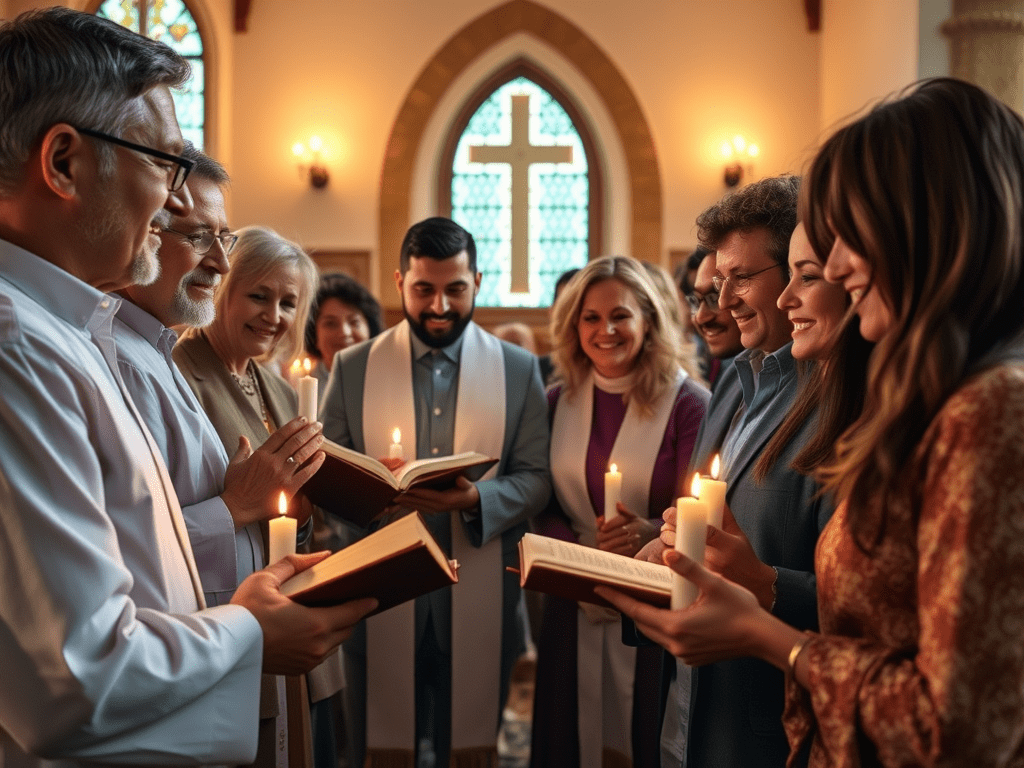
One of the greatest blessings of the gospel is this: every believer in Christ is a priest. The Bible calls us a “royal priesthood” (1 Pet 2:9), and this truth lifts us into a life of dignity and responsibility. For Martin Luther and the Reformers, this truth was like a trumpet blast, stirring the hearts of Christians everywhere. It reminded us that through Christ, we can approach God directly, without needing a human mediator, as we see in Hebrews 4:16, where we are encouraged to “approach God’s throne of grace with confidence.” This powerful truth not only empowers us but also deepens our relationship with God, fostering a loving community among believers, as stated in 1 John 1:7, which says, “if we walk in the light, as he is in the light, we have fellowship with one another.” But what does this mean for us today? Does this radical shift suggest that anyone can baptize, lead the Lord’s Supper, or preach on Sunday morning? In Matthew 28:19, we are all given the Great Commission to make disciples, showing that our priestly roles involve serving others and sharing the gospel. Recognizing our priesthood encourages us to fulfill these sacred duties and engage actively in the life of the church. We are called to serve one another with love and humility, as reflected in Galatians 5:13, reminding us that we should “serve one another humbly in love,” embodying the grace we have freely received in Christ. Through this calling, we can truly impact our faith community and the world around us.
God’s Plan for a Royal Priesthood
From the very beginning, God intended for His people to be a priestly nation. At Mount Sinai, He clearly stated, “You shall be to me a kingdom of priests and a holy nation” (Exod 19:6). This meant that God’s plan was for His people to serve Him and reflect His glory in the world. In the New Testament, the Apostle Peter reinforces this vision for the church, saying, “You are a chosen people, a royal priesthood, a holy nation, God’s special possession, that you may declare the praises of Him who called you out of darkness into His marvelous light” (1 Pet 2:9). This shows that God’s desire for a priestly people continues on into the life of the church today.
Craig Keener reminds us that “1 Peter shows that all God’s people are now consecrated for priestly service, offering worship and proclaiming His greatness” (1 Peter, p. 301). This is a beautiful truth that illustrates that every single believer, regardless of their background or status, is called to serve in God’s work. As Wayne Grudem explains, “This priesthood is corporate, not just individual. It means the whole church together is called to worship and to serve” (1 Peter: TNTC, pp. 109–112). This means we’re not meant to walk our faith journey alone; instead, we are called to gather together in the body of Christ.
In fact, Daniel Doriani captures this idea perfectly when he writes, “We are living stones built together as God’s house. Together we serve as priests in worship and mission” (1 Peter: REC, p. 105). The Bible tells us in Romans 12:5, “so in Christ we, though many, form one body, and each member belongs to all the others.” This shows that we are not just isolated individuals; we are interconnected and reliant on each other in our faith journey.
The church is not merely an audience—it is a priesthood. Every believer is called to worship, intercede, and witness. This calling is not just for a few select individuals; it includes everyone. In Luke 10:2, Jesus instructed us to “ask the Lord of the harvest, therefore, to send out workers into his harvest field.” Each of us has a role in bringing the good news of Jesus to the world. This imperative is a reminder that the mission of the church is a collective effort, not a solo act.
As we embrace our identity as a priesthood, we are encouraged to worship together, pray for one another, and share the love of Christ in our communities. The essence of being a priesthood means that every member has a unique and significant part to play. Hebrews 10:24-25 reminds us, “And let us consider how we may spur one another on toward love and good deeds, not giving up meeting together, as some are in the habit of doing, but encouraging one another.” This is a beautiful picture of how we are meant to live out our faith together.
When we come together as the body of Christ, we create a space where faith flourishes. Our collective worship reflects the diverse expressions of our spiritual journeys, each voice adding to the harmony of the church. As we gather, we not only strengthen our own faith but also uplift those around us. Our prayers for one another act as conduits of grace, fostering a community rooted in love and support.
Additionally, the act of encouraging one another helps us to remain accountable in our walks of faith. It reminds us that we are not alone in our struggles and that we are called to bear each other’s burdens. In doing so, we reflect the very heart of Jesus, who called us not just to believe but to actively participate in the ministry of reconciliation, where every action counts and every believer is vital to God’s plan.
Ultimately, being part of a priesthood invites us into a deeper relationship not just with God but also with one another. As we seek to fulfill our roles, we grow together, becoming a radiant testament to the love of Christ in our communities. Let us continually remind ourselves and each other of our collective calling, encouraging one another to step into the abundant life that God has for us all.
So, let us take to heart this calling to be a royal priesthood, serving together in worship and mission. Each of us plays a vital role in God’s grand plan, and together we can make a powerful impact in the world around us. Let’s encourage one another and lift each other up as we fulfill our priestly duties before God.
Our Priesthood Comes from Christ
How do we become priests? It’s important to understand that we’re not made priests through our own efforts but through Christ, our Great High Priest. In Hebrews 7:24, we read, “Jesus holds His priesthood permanently, because He continues forever.” This means that through His death and resurrection, He has opened the way for us to come to God, as stated in Hebrews 4:16, which encourages us to “approach God’s throne of grace with confidence.”
R.C. Sproul shares a powerful insight: “When Peter spoke of the priesthood of believers, he was not saying there are no distinctions of office in the church. He was saying that the priesthood belongs to the whole Christian community, because Christ’s priesthood now extends to His people” (1–2 Peter: Expositional Commentary, p. 76, 82). This truth teaches us that every believer, no matter their role in the church, shares in this incredible calling. It reminds us that God’s grace embraces us all, empowering us to serve Him in various ways.
The idea of the priesthood of all believers is essential for understanding who we are as Christians. In 1 Peter 2:9, it says, “But you are a chosen race, a royal priesthood, a holy nation, a people for his own possession.” This verse emphasizes that we are all part of God’s family and play an important role in His work on earth. Nothing separates us from the calling to serve; rather, we are united in our purpose to shine His light in the world.
Thomas Schreiner adds to this understanding: “The church is God’s elect possession, and each believer serves in priestly ways by offering spiritual sacrifices through the Spirit” (1 & 2 Peter, Jude, NAC, pp. 113–119). Romans 12:1 encourages us to present our bodies as “living sacrifices, holy and pleasing to God,” which is our true act of worship. This means worship goes beyond just singing songs on Sunday; it includes how we live our daily lives. Every good deed, every act of compassion, and every word of encouragement can be seen as a gift to God.
Even Augustine said, “In ancient times only one high priest was anointed, but now all Christians are anointed” (cited in Keener, p. 301). This great joy reminds us that we all have the Holy Spirit stirring within us, equipping us to represent God wherever we are. In John 14:26, Jesus promised us the Helper, the Holy Spirit, who teaches us and reminds us of everything He has said. With this divine empowerment, we can boldly serve in our communities and share the Good News with others.
The wonderful news is that this is not just a responsibility; it is a privilege! We get to participate in God’s work to bring hope and love to those around us. As Paul writes in Ephesians 2:10, “For we are his workmanship, created in Christ Jesus for good works, which God prepared beforehand, that we should walk in them.” This verse highlights how God has a unique plan for each of us—an individual purpose that fits within the greater story He is telling through His church.
As we embrace our roles as part of this royal priesthood, we encourage and uplift one another in faith. Hebrews 10:24-25 reminds us to “consider how to stir up one another to love and good works.” Together, we can make a difference in our families, neighborhoods, and beyond, reflecting the light of Christ to a world in need. As we do this, we fulfill our calling as God’s chosen people, living out our faith in action and making an eternal impact.
Our priesthood is not ours by nature. It is given to us because we share in Christ’s priesthood. 1 Peter 2:9 reminds us, “But you are a chosen people, a royal priesthood, a holy nation, God’s special possession…” This verse emphasizes that we are set apart for special purposes in God’s family. We are priests only because He is our High Priest.
As we embrace our role as priests, we can confidently approach God and intercede for others, just as we see in James 5:16 where it says, “The prayer of a righteous person is powerful and effective.” Let us cherish this calling to live out our faith boldly and love others well, reflecting the love of Christ in our conversations and actions. By doing so, we fulfill our priestly responsibilities and shine God’s light in the world.
Does This Mean No Leaders in the Church?
If everyone is a priest, does that mean no one should lead? Absolutely not! The Apostle Peter brings clarity to this truth in his letters. In 1 Peter 2:9, he beautifully states that the church is a “royal priesthood.” This signifies that all believers have direct access to God and a special role in serving Him. However, in chapter 5 of the same letter, Peter stresses the importance of leadership: “Shepherd the flock of God that is among you, exercising oversight… not domineering, but being examples to the flock” (1 Pet 5:2–3). This shows us that while every believer is a priest, there is also a call for certain individuals to lead in a Christ-like manner.
Jim Samra highlights this balance when he says, “If we take 1 Peter 2:9 and ignore 5:1–6, the priesthood of believers can be twisted into a no-leadership theology. Peter never meant that. He expected elders to lead with humility and service” (James, 1 & 2 Peter, Jude, Teach the Text, p. 177). This warns us that recognizing everyone as a priest doesn’t mean we dismiss the need for leaders. Instead, it highlights the crucial role of elders who are called to serve the church with grace and humility, ensuring that the community of believers is supported, taught, and guided in their spiritual journeys.
Simon Cuff reminds us by saying, “All Christians are priests, but not all are called to public ministry. That work belongs to the community and is entrusted to some for the sake of order and mission” (Priesthood for All Believers, pp. 45–47). This insight emphasizes that while each individual member has a unique contribution to the body of Christ, the framework of church leadership is divinely ordained, with specific leaders designated to help maintain harmony, purpose, and focus within the congregation. The various gifts within the church work together, but it is vital to have appointed leaders who ensure that the church functions smoothly and effectively in fulfilling its mission.
Daniel Doriani sums it up well: “Christ rules His church through human shepherds who lead by feeding, guiding, and protecting—not lording it over the flock” (1 Peter: REC, pp. 165–166). This understanding reminds us that leadership in the church is not about exerting power or control; rather, it is a calling to nurture and support the congregation, much like a shepherd cares for his sheep. These leaders are tasked with enlightening others through the teachings of Scripture and fostering a communal spirit of love and service. They follow the example of Jesus, the Good Shepherd, who cares for His sheep (John 10:11). This model of leadership encourages cooperation and encourages every member of the church to participate actively in the life of the community, highlighting that while there are leaders, the responsibility to serve and care extends to all believers.
In summary, the leadership structure within the church is a vital aspect of maintaining a balanced and healthy Christian community. Elders and leaders provide guidance, instruction, and support, ensuring that the mission of the church is accomplished while also recognizing and uplifting the priesthood of all believers. This duality fosters a culture of mutual respect, accountability, and communal growth, enabling each believer to thrive while benefiting from the wisdom and direction of those chosen to lead.
Every believer is a priest before God, which means we all have the privilege to worship Him and serve one another. This fundamental truth empowers each individual to approach God personally and intimately, recognizing that our relationship with Him is direct and profound. Yet, Scripture also teaches that God provides leaders for His church, as stated in Ephesians 4:11–12. These leaders do not replace our priesthood; instead, they help us fulfill it. They play a vital role in guiding us through spiritual teaching, offering counsel, and creating opportunities for service, thus ensuring that we are equipped to share our faith and love within the community.
These leaders serve as mentors and examples, exemplifying the attributes of Christ. They encourage us to develop our spiritual gifts and help us understand the significance of our roles within the body of Christ. By doing so, they foster an environment of growth, accountability, and support, which is essential for a thriving church community. The interplay between laity and leadership is a beautiful dance of mutual respect and cooperation, where everyone is valued and has a part to play in God’s grand design.
In the body of Christ, we find a beautiful balance: we are all called to minister to each other, but God has equipped some among us to lead in love and service. This cooperation creates a healthy environment where every believer can thrive, learn, and contribute to the mission of spreading the Gospel. When we work together, embracing both our individual and collective roles, we strengthen our church community. We become living testimonies of God’s love, reflecting His character in our actions and interactions.
Together, we can engage in various forms of ministry—be it in teaching, serving the needy, or praying intercessively. Each act of service, no matter how small, has a ripple effect that can impact lives and communities. Moreover, as we grow in faith under the guidance of our leaders, we equip ourselves to take ownership of our spiritual journeys, spreading hope and sharing the message of Christ with others. Thus, the harmonious collaboration of every believer and appointed leaders not only fulfills our Divine calling but also ensures that our church community grows in faith and mission, fulfilling the Great Commission as we reach out with love and compassion to a world in need.
Baptism, the Lord’s Supper, and Preaching
How does this important truth relate to baptism, communion, and preaching? Baptism is an outward sign of an inward change, symbolizing our new life in Christ as stated in Romans 6:4, where we are buried with Him in baptism and raised to walk in newness of life. Communion, or the Lord’s Supper, is a powerful reminder of Jesus’ sacrifice, as seen in Luke 22:19-20, where He instructs us to do this in remembrance of Him. Preaching, on the other hand, is how we share the Gospel and the hope of salvation; Romans 10:14 emphasizes the importance of preaching, stating that faith comes from hearing the message of Christ. Together, these practices strengthen our faith and deepen our relationship with the Lord.
- Baptism: Luther emphasized that in urgent situations, any Christian can perform a baptism since it is closely connected to the gospel. He noted, “If believers in the wilderness had no priest, they could choose one among them to baptize and lead” (quoted in Cuff, p. 46). This aligns with Acts 10:47-48, where Peter baptized the Gentiles after they received the Holy Spirit. However, during regular times, baptism should be carried out by recognized church ministers, who are trained and authorized to perform this sacred rite within the Christian community. This practice helps maintain unity within the church and ensures that the teachings are correct, as outlined in Matthew 28:19-20, where Jesus commands His disciples to make disciples and baptize them. It reinforces the spiritual and communal aspect of the church, reminding the faithful of their collective responsibility to uphold the gospel in their lives and actions.
- The Lord’s Supper: T.F. Torrance explained, “The royal priesthood is corporate, but the ordained ministry is a special qualification within it, serving the whole body in Word and Sacrament” (Royal Priesthood, p. 22). This is why most churches ask ordained leaders to preside at the Table—it safeguards the church’s unity and testimony (1 Cor 11:17–34). In this sacred act, believers come together not just as individuals, but as a family of faith, affirming their trust in Jesus and honoring His great love in laying down His life for us (John 15:13). As we partake, we remember His sacrifice and celebrate His resurrection, which brings us hope (1 Peter 1:3). The ordained leaders play a vital role in this observance, ensuring that we approach the Table with reverence and understanding (Hebrews 10:24-25). Their guidance helps to reinforce our commitment to one another in Christ, fostering a spirit of unity and mutual encouragement within the body of believers.
- Preaching: Luther made a careful distinction: “It is true that all Christians are priests, but not all are pastors. To be a pastor requires a call and commission from the church” (Anizor & Voss, Representing Christ, p. 61). Sproul explained further, “The New Testament clearly lays the foundation for distinctions of office. The priesthood belongs to all, but the preaching office belongs to those called and ordained” (1–2 Peter, p. 76). This distinction helps us understand the important role of ministry in the church. While every believer has the privilege to approach God as their own priest (Hebrews 4:16), pastors have a special calling to shepherd the flock, guided by Scripture (Acts 20:28). Their responsibility is not just to lead, but to teach sound doctrine and encourage believers to grow in their faith, as we see in 2 Timothy 4:2, which calls us to “preach the word; be ready in season and out of season.” Recognizing these roles is vital for nurturing a healthy church community, as God has designed a system where every member contributes to the body of Christ (1 Corinthians 12:12-27).
All Christians pray, worship, and witness together, living out their faith as a united body of believers. While every believer has a role in sharing the Gospel, public preaching, baptism, and communion are usually entrusted to church leaders, like pastors and deacons, who have been called and prepared for these sacred tasks (Ephesians 4:11-12). This practice ensures that the Word of God is preached faithfully, echoing the teachings of Christ and His apostles, which is essential for growing in faith (2 Timothy 4:2). By having recognized leaders guide these vital acts, the church maintains order, unity, and reverence during worship services, reflecting the peace of Christ among its members (Colossians 3:15). Through these leaders, the church also cultivates an atmosphere of respect, allowing believers to focus on their relationship with God while fostering love and harmony within the community (Philippians 2:1-2). Ultimately, this structure empowers leaders to provide spiritual nourishment and pastoral care, strengthening the bonds of faith that are foundational to the Christian walk (1 Thessalonians 5:12-13).
The Beauty and the Balance
The doctrine of the priesthood of believers lifts up every Christian, reminding us that each one of us can approach God directly through Christ. We don’t need anyone else to intercede for us—our prayers are heard, and every act of worship matters. This truth echoes 1 Peter 2:9, which tells us that we are a “chosen people, a royal priesthood,” highlighting our call to serve God and share His love.
While this doctrine empowers every believer, it does not mean that leadership is unnecessary. Michael Bird rightly points out, “To secure theological and doctrinal integrity, it is beneficial to have ordained presiders for communion and preaching” (Evangelical Theology, 2nd ed., p. 930). This aligns with Hebrews 13:17, which instructs us to obey our leaders, recognizing their role in guiding us in our faith. These ordained leaders help preserve sound teaching and lead the church in worship and the sacraments.
Torrance beautifully summarizes this dynamic with the quote: “The church is a royal priesthood, but within it some are set apart to serve. Their calling is not domination but service, to equip the people for their priestly life in Christ” (Royal Priesthood, p. 22). This echoes Ephesians 4:11-12, where we read that Christ gave some to be apostles, prophets, evangelists, pastors, and teachers to prepare God’s people for works of service. Leaders are not meant to dominate but to serve, equipping others to live out their unique priestly roles.
Every believer is indeed a priest, called to serve God and others. In Romans 12:1, we’re urged to offer our bodies as living sacrifices, which is our true and proper worship. This act of offering ourselves goes beyond mere rituals; it encompasses our daily lives, thoughts, and actions, demonstrating our commitment to God and His purposes. This alignment with God’s will allows us to become vessels for His love and grace in the world.
However, God does call certain individuals to specific leadership roles, helping shepherd the flock. These leaders are not to be viewed as distant figures in authority but rather as guides, mentors, and servants who facilitate the spiritual growth of the church. Just as in Acts 20:28, where Paul reminds elders to “keep watch over yourselves and all the flock,” leaders play a vital role in guiding and protecting the church. They are entrusted with the responsibility of nurturing the spiritual health of the community, praying for its members, teaching God’s Word accurately, and being examples of Christlike living.
Together, we serve the Lord’s mission, walking in unity as a body of believers. Ephesians 4:3 encourages us to maintain the unity of the Spirit in the bond of peace, highlighting that our diverse gifts and backgrounds should not divide us but rather enhance our collective strength. As 1 Corinthians 12:12-14 explains, just as a body has many parts, every believer has a unique function and purpose within the church. Each gift, whether it be teaching, encouraging, serving, or leading, is crucial for building up the body of Christ and fulfilling the Great Commission.
This partnership between leaders and congregants reflects God’s design for His church, encouraging all of us to actively participate in sharing the Gospel and growing together in faith and love. It is through collaboration and mutual support that we can accomplish the work God has called us to do. By recognizing our roles and respecting the contributions of others, we cultivate a vibrant community that edifies one another, sparks spiritual growth, and shines as a light in the world, ultimately bringing glory to God.
Living as Priests Today
The priesthood of believers is not just about having a title; it’s a vital call to join in God’s mission. Because of Jesus Christ, every believer has been made a priest, and this means something very special for each of us! As priests, we have the incredible ability to pray confidently, intercede for others, worship joyfully, and share the good news of the gospel with those who are lost.
Scripture tells us in Revelation 1:6 that Christ has made us “a kingdom and priests to our God,” which shows that we all share in this sacred role. This is a beautiful reminder that we are not alone in this. Each believer is equipped to offer their lives as living sacrifices as stated in Romans 12:1. It’s a call to dedicate our everyday actions to God, fully surrendered to His will and purpose. Think of it as offering our hearts, our hands, and our voices for His glory.
Moreover, we are called to intercede for those who don’t yet know Christ. 1 Timothy 2:1-4 encourages us to pray for everyone, especially those who are lost. Our prayers can make a significant difference, reaching out to hearts that need to feel the love of God. We should not underestimate the power of prayer; it can break down walls and open doors to the gospel.
As we’re reminded in 1 Peter 2:9, we are chosen people, called to declare His praises. This means we should be bold in sharing the light of Christ that shines within us! Our role as priests is not just reserved for Sundays or church gatherings but should seep into our everyday lives. We are called to reflect His love through our actions, our kindness, and our willingness to share the hope we have found in Him.
So let’s ask ourselves: If Christ has made you His priest, are you living like one? Are you offering your life daily as a spiritual sacrifice? Do you take the time to pray for the lost? Are you shining His marvelous light in your words and deeds? We must not let the responsibilities of the priesthood fall solely on church leaders or pastors. Every believer has a part to play in God’s great mission.
Embracing our identity as priests means actively engaging in our communities and sharing the love of Christ with everyone around us. Let us rise to the call, knowing that through Christ, we are empowered to be His ambassadors (2 Corinthians 5:20). Together, we can fulfill the mission He has set before us, making a lasting impact in the world!
The truth is this: in Christ, every believer is a priest—but every priest has a mission.
 Jonathan Samuel's Pilgrim Thoughts
Leave a comment