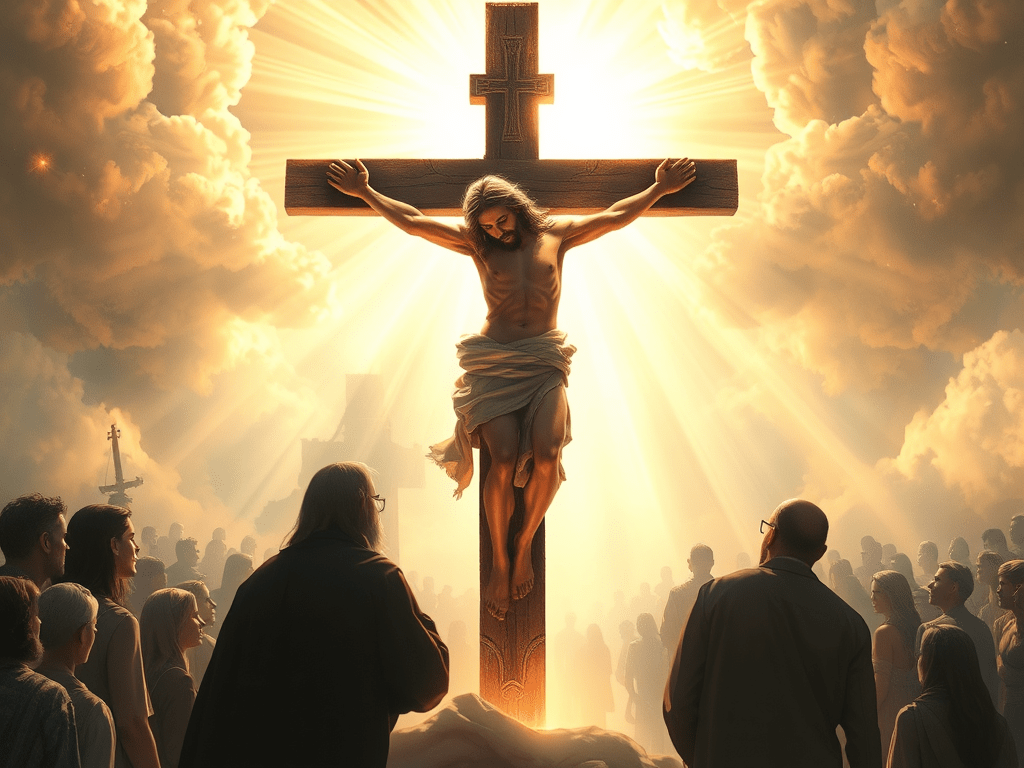
The Centrality of Reconciliation in the New Testament
The doctrine of reconciliation stands as the heart of the New Testament, vital for grasping the wonderful gift of salvation offered to every believer. Reconciliation not only points to the healing of broken relationships among people, as we see in Matthew 5:24 and Luke 12:58, but it also leads us to understand the grand and loving purpose of God, who longs to draw us back to Himself through Jesus Christ, as spoken in 2 Corinthians 5:18–20.
In His immense love, God took the initiative to bring us back into fellowship with Him. Through Christ’s sacrifice on the cross, we witness the depths of God’s grace and mercy, where peace, restoration, and transformation flow abundantly (Romans 5:5–11; Ephesians 2:16). When we put our faith in Jesus, we are no longer separated from God; instead, we become new creations—reborn and renewed in Him (2 Corinthians 5:17). This truth is not just a theological concept; it’s the beautiful reality of our lives as believers.
Moreover, God’s gift of reconciliation extends beyond each individual; it touches all of creation. In Colossians 1:19–20, we learn that God’s plan includes not just us but the entire universe, longing for the day when everything will be restored and made right. This divine promise instills hope in our hearts, knowing that God is working to bring peace not only to our lives but to the world around us.
Reconciliation, therefore, is the lifeblood of the gospel—it calls us to live out our faith in active, loving ways. As we embrace this gift, we are challenged to be peacemakers in our homes, communities, and beyond, sharing the love of Christ with others and reflecting His character. Let us rejoice in the wondrous truth that we are reconciled to God, and let that joy overflow into the world, as we become instruments of His love and grace.
Definition of Reconciliation in the New Testament
Reconciliation, in general, is the act of resolving conflicts and mending estranged relationships. Biblically, this includes both non-doctrinal and doctrinal contexts. Jesus’ teaching in the Sermon on the Mount (Matt 5:24) and Paul’s instruction on marital separation (1 Cor 7:11) highlight non-doctrinal reconciliation. In contrast, doctrinal passages like Rom 5:10–11, 2 Cor 5:17–20, and Col 1:20 stress God’s initiative in reconciling sinners to Himself.
The Greek term katallassō signifies a change in relationship, emphasizing that reconciliation is something God accomplishes for and within us (Walter Bauer, Frederick W. Danker, William F. Arndt, and F. Wilbur Gingrich, A Greek-English Lexicon of the New Testament and Other Early Christian Literature, 3rd ed. [Chicago, IL: University of Chicago Press, 2000], 521). This divine act transforms not only our status before God but reshapes our identity and mission as believers.
The Doctrine of Reconciliation in the Gospels
Jesus’ ministry is centered upon the glorious restoration of mankind unto God, a wondrous theme that doth echo throughout the very fabric of His holy teachings. His words and deeds were steadfastly directed towards the embodiment of reconciliation, as seen in the parables that flowed from His lips and the compassion He extended unto the lowly and downtrodden. By consorting with those whom the world cast aside, Jesus revealed a profound message of inclusiveness and divine love. Lo, His ultimate act of reconciliation was His atonement—His sacrificial death upon the cross, a offering that not only fulfilled the ancient prophecies but also opened wide the gates of redemption for all humankind, bridging the chasm betwixt a holy God and a fallen creation. Through this noble act of selflessness, He manifested the boundless depths of divine love and the great lengths to which He would go to mend our broken relationship with the Creator.
Colin E. Gunton emphasizes, “Human acts of reconciliation are in accordance with the structure of reality which God in Christ creates… the reconciliation initiated by God in Christ is the groundwork for any human ethical endeavor towards peace and reconciliation” (The Theology of Reconciliation [London, UK: A&C Black, 2003], 117–118).
Jesus Christ as the “Means” for Reconciliation Between God and Humanity
From incarnation to resurrection, Jesus functioned not merely as a teacher but as the Mediator, the Lamb of God (John 1:29). He came to reconcile sinners to a Holy God through His atonement work. This pivotal role emphasizes not only His divine authority but also the profound love and grace extended to humanity. Through His sacrifice, Jesus offered a pathway for redemption, demonstrating the depth of God’s commitment to restoring the broken relationship caused by sin.
This initiative was God’s response to humanity’s fall and alienation, addressing the chasm created by transgression. John 3:16 poignantly captures the Father’s heart to reconcile humanity, showcasing His desire for a relationship based on love, mercy, and forgiveness. It underscores the essence of the Gospel: God’s willingness to give His only Son for the sake of humanity reflects the depths of divine love.
The theological implications of this reconciliation extend beyond individual salvation; it encompasses a holistic restoration of all creation. Jakobus M. Vorster writes, “God’s act of reconciliation has an eschatological nature and character… bestowing eternal peace and new creation status” (“The Doctrine of Reconciliation: Its Meaning and Implications for Social Life,” In Die Skriflig 52.1 [2018]: 2). This perspective invites believers to recognize the transformative power of reconciliation, challenging them to live out this truth in community and society.
Additionally, B. B. Warfield affirms the alignment of God’s love, Christ’s mission, and the reconciliation plan (“God’s Immeasurable Love,” The Reformed Journal [1967]: 20–21). Warfield’s insights remind us that the message of reconciliation is not only central to Christian doctrine but also practical in its application. As followers of Christ, we are called to embody this spirit of reconciliation in our relationships with others, extending grace and fostering unity as a reflection of the divine love we have received.
In summary, the work of Christ as the Mediator and Lamb of God is foundational to our understanding of salvation, embodying the heart of God’s desire to bring humanity back into a harmonious relationship with Him. This profound act of love and redemption invites an ongoing response of gratitude, worship, and active participation in God’s mission of reconciliation in the world.
Jesus as the “Means” to Seek and Save the Lost
Jesus’ mission was to seek and save the lost (Luke 19:10), an endeavor that significantly highlights His purpose on earth. His interaction with Zacchaeus is a prime example of this mission in action. This encounter not only illustrates the transformative power of Jesus’ love and acceptance but also emphasizes the importance of forgiveness and redemption. Monique Cuany notes that Zacchaeus’ restoration reflects God’s desire for personal and communal reconciliation (“Today, Salvation Has Come to This House,” Currents in Theology and Mission 45.4 [2018]: 6). Through this narrative, we see that even those society views as outcasts can find hope and belonging through faith, reinforcing the idea that Jesus came to bridge the gap between humanity and God, thus inviting everyone, regardless of their past, to experience His grace and mercy.
Jesus as the “Means” to Forgive Sins
Forgiveness is a critical step in the reconciliation process, serving as a bridge that connects estranged individuals and allows for healing to occur. In Mark 2:5, Jesus exemplifies this principle by forgiving the paralytic man’s sins before proceeding to heal him physically, thus demonstrating the profound link between spiritual and physical restoration. Anthony Bash argues, “Jesus is the only divine means… with the authority of forgiving and the act of divine reconciliation” (Just Forgiveness: Exploring the Bible, Weighing the Issues [London, UK: SPCK, 2012], 64). This highlights the unique role of Christ in the act of forgiveness, emphasizing that it is not merely a human gesture but a divine transaction with the power to transform lives.
Likewise, in Luke 7:48, Jesus forgives the sinful woman not because of her love, but by His sovereign authority, reinforcing the idea that forgiveness flows from His grace rather than our merit (Ben Witherington, “Jesus, the Savior of the Least, the Last, and the Lost,” Quarterly Review [1995]: 14; Philip Graham Ryken, Luke: Reformed Expository Commentary [Phillipsburg, NJ: P&R Publishing, 2009], 421). By doing so, Jesus indicates that forgiveness can lead to a deeper understanding of love and repentance, creating a space where individuals can find hope and redemption, ultimately drawing them closer to God and to one another.
Jesus as the “Means” to the Atonement for Sinners
Mark 10:45 and Matthew 20:28 serve as textual anchors that underscore the pivotal theme of Jesus’ death as substitutionary in nature. The use of the preposition anti (ἀντί) within these verses signifies a profound notion, specifically “in the place of,” which indicates the concept of penal substitution. In essence, this suggests that Christ willingly took upon Himself the penalty that humanity was destined to bear, thereby acting as our ransom (lytron). His sacrificial act liberates us from the bondage of sin and the inevitability of death, as elaborated by Gregory A. Boyd et al. in their work The Nature of the Atonement: Four Views (Westmont, IL: InterVarsity Press, 2009, 101).
The significance of Jesus’ sacrifice is profoundly rooted in the Old Testament sacrificial system, particularly as outlined in Leviticus 16:29–34. This system adequately foreshadows the ultimate offering that would take place. Jesus is frequently referred to as the sinless Lamb in John 1:29, embodying the fulfillment of what was merely a shadow in Old Testament sacrifices. This fulfillment is further supported by the New Testament teachings found in Hebrews 9:12–14 and 10:10–14, where the efficacy of Christ’s sacrifice is contrasted with the limitations of the old system.
Additionally, the prophet Isaiah emphasizes this notion of substitution in Isaiah 53:4–5, where he vividly articulates the sufferings of the Messiah, laying the theological groundwork for the understanding of atonement as inherently linked to an act of substitution.
Pieter Michiel Venter elaborates on this theme by affirming that the sacrificial system acts as a typological pointer towards Christ. In his article, “Atonement through Blood in Leviticus,” published in Verbum et Ecclesia 26.1 (2005, 8), he elucidates how the rituals and offerings described in Leviticus serve to prefigure the ultimate sacrifice of Christ. The typological interpretation portrays the sacrificial acts as anticipatory symbols of the imminent greater sacrifice.
Derek Tidball and his colleagues further stress the importance of penal substitution in their text The Atonement Debate (Grand Rapids, MI: Zondervan Academic, 2009, 18, 123). They delve into discussions surrounding atonement and explore the various theological perspectives that converge on the understanding of Christ’s death as a necessary act of substitution for the sins of humanity.
Moreover, William G. Witt and Joel Scandrett provide a comprehensive examination of how atonement leads to reconciliation in their book, Mapping Atonement: The Doctrine of Reconciliation in Christian History and Theology (Grand Rapids, MI: Baker Books, 2022, 80–85). They articulate how this process of atonement not only reflects God’s justice but also encapsulates His love and desire for restored relationship with humanity.
In synthesizing these theological perspectives, one discovers a rich tapestry of scriptural and scholarly insights that affirm the significance of Jesus’ sacrificial death as a central tenet of Christian faith, illuminating its implications for redemption and reconciliation.
Peace as the Final Result of Reconciliation
Jesus’ atonement results in true peace—not merely the absence of conflict, but a profound peace with God and within ourselves. This concept is beautifully articulated in the Gospel of John, specifically in John 14:27 and John 16:33, where Jesus reassures His followers that His peace will be a guiding force even amid life’s struggles and tribulations. This peace is not only a present experience but also a future hope, providing believers with a sense of security and assurance in their relationship with God. Matthew A. Tapie, in his article “For He Is Our Peace: Thomas Aquinas on Christ as Cause of Peace in the City of Saints,” published in the Journal of Moral Theology, highlights how this notion of peace can transform our understanding of community, suggesting that it is rooted in the divine relationship offered through Christ. Peace is thus repositioned from a mere lack of discord to a vibrant and thriving state of spiritual well-being that affects both individuals and communities.
Additionally, Aaron Moldenhauer explores how Martin Luther perceived this promise as foundational to the Christian faith, significantly influencing his personal and pastoral theology. In his work “Peace under the Cross: Peace in the Theology of Martin Luther,” published in Logia: A Journal of Lutheran Theology, he addresses how Luther grappled with the notion of peace in the context of suffering and adversity. For Luther, peace does not imply an escape from trials but rather an inner strength and reassurance that believers can possess regardless of their circumstances. This dynamic perspective positions peace as an active presence in the life of believers, urging them to lean into their faith for comfort and courage amid difficulties.
Together, these insights from both Tapie and Moldenhauer illuminate the transformative power of Christ’s atonement, offering a richer understanding of peace in the life of the believer. This peace, which encompasses both divine reconciliation and personal tranquility, empowers individuals to live boldly and purposefully, reflecting the grace they have received. Through this lens, peace becomes a means of fostering relationships not only with God but also with others, creating a community infused with hope and love.
Jesus’ Fulfilment of Peace After Resurrection
In John 20:19–22, the risen Jesus declares “Peace be with you,” demonstrating fulfilled reconciliation between humanity and God—a profound moment that not only marks the triumph over sin and death but also serves as an invitation to experience divine tranquility. His greeting is not condemnation but restoration, underscoring His mission to mend the broken relationship that had existed since the Fall. The wounds in His hands show the cost of peace, serving as a poignant reminder of the suffering He endured for our redemption (Leon Morris, The Gospel According to John [Grand Rapids, MI: William B. Eerdmans Publishing Company, 1995], 844). As He breathes the Holy Spirit upon His followers, He empowers them with the ability to carry forth His message of hope and transformation, illuminating the path towards genuine peace in a tumultuous world. This moment encapsulates the essence of His resurrection—a powerful assurance that, through Him, we can attain wholeness and healing, both individually and collectively.
Jesus as a Role Model for Reconciliation
Jesus’ restoration of Peter (John 21:15–17) reveals God’s profound desire to redeem and use the broken, showing that no failure is beyond His reach. Lauren K. Sierra reflects on this transformative encounter, stating, “Jesus lowered himself to lift the failure’s hanging head… despite his failure, Peter would become the leader of the early church” (“The God Who Condescends: Leadership in the Gospel of John,” Christian Education Journal 18.1 [2021]: 66). This moment is significant not only for Peter but also for all individuals who may feel unworthy of God’s grace; it underscores the theme that God often chooses the flawed to fulfill His divine purposes. Through this act of restoration, Jesus sets a powerful example for leaders in the church and beyond, reminding us that true leadership often emerges from a place of vulnerability and redemption. In embracing our shortcomings and recognizing the potential within our brokenness, we can step into the roles God has prepared for us, highlighting that His love transcends our failings.
Jesus’ Ethical Command to Practice Reconciliation in Ecclesial Life
Matthew 5:23–24 urges prioritizing reconciliation over religious acts, emphasizing that genuine relationships and harmony among individuals are vital to worship. Edward Gerber calls this the “unnatural act of forgiveness,” framing it as not just a personal challenge, but a transformative process that aligns with the ethic of the Kingdom, detailed in his work (Bulletin of Ecclesial Theology 8.1 [2021]: 38). This act of forgiveness is essential, as it serves to counter the human tendency to harbor resentment and division, promoting instead a spirit of unity and understanding. Virtus E. Gideon further emphasizes this concept as a quintessential aspect of Christian responsibility, arguing that true worship cannot exist in the absence of reconciliation. He asserts that such practices profoundly shape the believer’s relationship with God and with others, as discussed in his article “Preaching Values in Matthew 5,” (Southwestern Journal of Theology 5 [n.d.]: 85–86). Through this lens, the call to forgive becomes not merely an individual obligation but a communal endeavor that reflects the core values of the Christian faith, urging believers to align their actions with the teachings of Jesus.
Reflection for the Church
Reconciliation is at the heart of New Testament theology. Through Jesus Christ’s life, death, resurrection, and teachings, God has extended peace, forgiveness, and restoration to a fallen world. The doctrine of reconciliation is not merely theological but deeply practical—impacting personal faith, community life, and the church’s mission.
The Gospels not only proclaim reconciliation but call us to embody it, reflecting the sacrificial love of Christ in our relationships. Jesus, our divine reconciler, invites us to participate in His ministry of peace, showing that the journey of reconciliation begins with God, flows through Christ, and extends into eternity.
But in light of Christ’s supreme act of reconciliation, how can we, as followers of the reconciled and reconciling Christ, persist in divisions, broken relationships, and unforgiveness within His body, the Church? If God has made peace with us through the blood of His Son (Col. 1:20), what then should stop us from being ministers of that same peace to others? Should not the cross compel us to pursue healing over hostility, restoration over resentment, and love over apathy? And if we truly believe that Christ has torn down the wall of hostility (Eph. 2:14), why do we allow pride, prejudice, and pain to keep us apart?
These questions are not meant to condemn but to awaken. They are an invitation—an invitation to imitate Christ’s reconciling love in our churches, our families, and our fractured world. The gospel calls not only for vertical peace with God but horizontal peace with one another. Will we respond to that call, or will we settle for a superficial unity that denies the costly grace of reconciliation?
JONATHAN SAMUEL KONALA M.Tech; MTh
 Jonathan Samuel's Pilgrim Thoughts
Leave a comment